
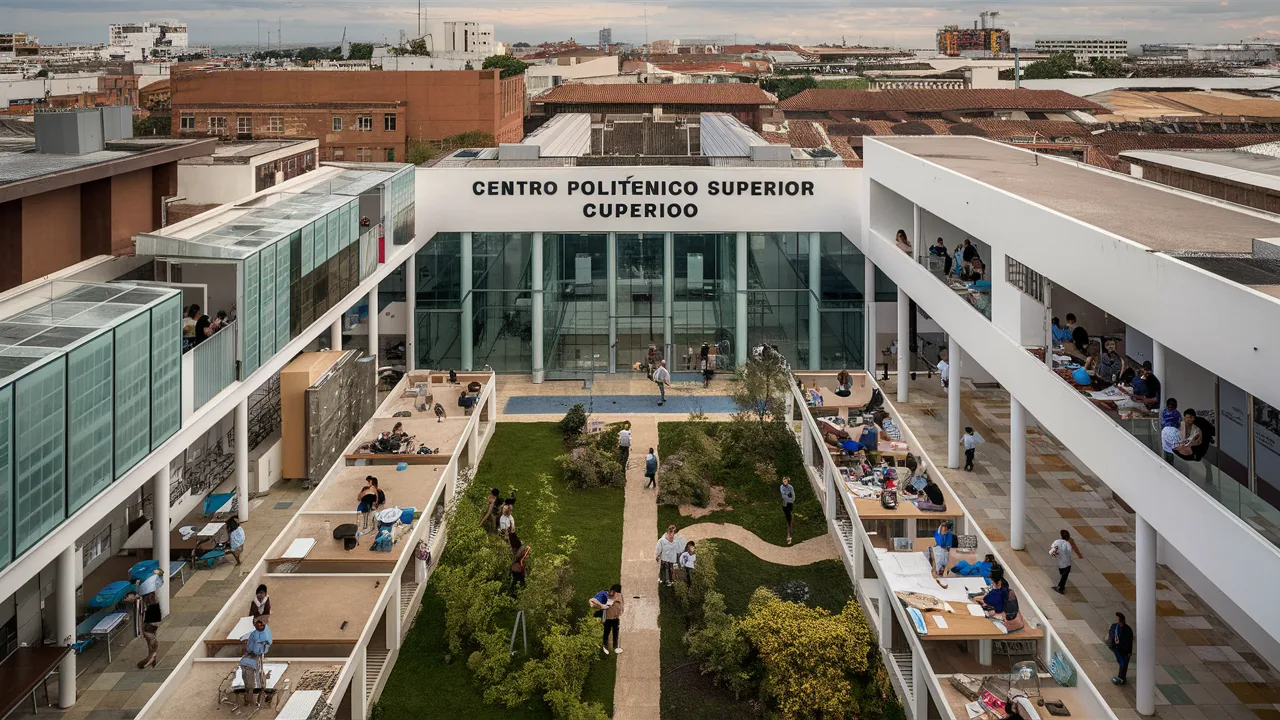
The Centro Politécnico Superior represents a benchmark in technical education, engineering excellence, and advanced research development within Spain’s higher education landscape. Known for its rigorous academic programs and strong integration with industry and technology sectors, this institution has shaped generations of engineers, scientists, and innovators. In this comprehensive guide, we explore its academic legacy, degree programs, research impact, campus facilities, student opportunities, and global relevance. We present a detailed overview designed to offer authoritative insight into why the Centro Politécnico Superior remains a reference point for students seeking excellence in engineering education, polytechnic studies, and applied sciences.
Academic Legacy and Institutional Background
The Centro Politécnico Superior has historically functioned as the engineering and technical education pillar within the prestigious Universidad de Zaragoza. Located in Zaragoza, the institution has built a reputation grounded in academic rigor, research-driven teaching, and strong collaboration with industrial partners. Its evolution reflects Spain’s broader commitment to strengthening STEM education, technological innovation, and applied engineering research.
Over decades, the Centro Politécnico Superior has adapted its academic structure to meet the demands of modern industries. Through curriculum modernization, laboratory upgrades, and international academic exchange agreements, it has maintained competitive standards aligned with the European Higher Education Area. The institution integrates theoretical knowledge with hands-on technical application, ensuring graduates possess both conceptual mastery and practical competence.
Engineering Programs and Degree Offerings
The academic portfolio at the Centro Politécnico Superior focuses heavily on engineering degrees, industrial technologies, computer science, mechanical engineering, electrical engineering, and telecommunications systems. Programs are structured at undergraduate, postgraduate, and doctoral levels, offering pathways for both foundational learning and specialized research development.
Undergraduate engineering programs emphasize strong mathematical foundations, physics, materials science, and systems analysis. Students progress into specialized technical modules that include robotics, automation, renewable energy systems, structural mechanics, and advanced computing architectures. These programs are carefully designed to integrate project-based learning, ensuring students engage in real-world engineering problem-solving from early stages.
At the postgraduate level, master’s programs expand into innovation management, advanced manufacturing technologies, sustainable energy engineering, and digital transformation systems. Doctoral studies further strengthen the institution’s research profile, encouraging interdisciplinary collaboration across engineering fields.
Research Excellence and Innovation Leadership
Research at the Centro Politécnico Superior drives technological advancement across multiple sectors. Faculty-led research groups focus on artificial intelligence, renewable energy optimization, smart grids, advanced materials engineering, industrial automation, and sustainable infrastructure systems. Through partnerships with European research networks and private industry, the institution actively contributes to scientific publications, patents, and applied industrial solutions.
Innovation is embedded within academic culture. Students participate in laboratory research, collaborative engineering projects, and innovation competitions. The integration between research centers and industry ensures that academic findings translate into practical applications in manufacturing, telecommunications, renewable energy, and digital technologies.
Campus Infrastructure and Learning Environment
The learning environment reflects a commitment to modern technical education. Laboratories are equipped with advanced simulation software, robotics platforms, high-performance computing systems, and renewable energy testing modules. Engineering workshops provide access to mechanical fabrication tools, materials testing equipment, and digital design workstations.
The campus in Zaragoza provides a dynamic academic ecosystem with lecture halls, collaborative learning spaces, innovation hubs, and technical libraries specialized in engineering sciences. This infrastructure supports both structured classroom education and independent research initiatives.
Industry Collaboration and Career Opportunities
A defining characteristic of the Centro Politécnico Superior is its strong connection to industrial partners. Engineering students benefit from internship programs, cooperative education models, and applied industry projects integrated into coursework. These partnerships allow students to gain practical experience before graduation, significantly strengthening employability.
Graduates pursue careers in automotive engineering, aerospace industries, renewable energy companies, construction firms, digital technology enterprises, telecommunications providers, and research institutions. The institution’s alumni network spans across Europe and beyond, contributing to multinational corporations and technological startups.
Career services provide professional guidance, resume workshops, and recruitment events, further enhancing employment outcomes for engineering graduates.
Internationalization and Global Academic Engagement
The Centro Politécnico Superior actively participates in international academic mobility programs. Through exchange agreements and collaborative research partnerships, students and faculty engage in cross-border educational experiences. Participation in European academic frameworks strengthens academic quality and fosters cultural exchange.
International students benefit from English-language master’s programs and research collaborations, positioning the institution as a competitive destination for global engineering education.
Admissions and Academic Requirements
Admission to undergraduate engineering programs typically requires strong academic preparation in mathematics and sciences. Competitive entry standards reflect the institution’s rigorous academic expectations. Postgraduate applicants must demonstrate prior specialization in relevant engineering disciplines.
Prospective students are evaluated based on academic transcripts, technical background, and, in some cases, language proficiency. The structured admissions process ensures that students entering the Centro Politécnico Superior possess the foundational skills necessary for success in demanding technical programs.
Student Experience and Academic Culture
Student life extends beyond classroom learning. Engineering associations, technical clubs, robotics teams, and innovation competitions provide platforms for collaborative learning and professional networking. Participation in technical conferences and academic symposia enhances exposure to global engineering advancements.
The academic culture emphasizes discipline, analytical thinking, teamwork, and ethical responsibility. Students graduate not only with technical proficiency but also with strong problem-solving and leadership capabilities.
Conclusion
The Centro Politécnico Superior stands as a pillar of engineering excellence, technical innovation, and applied research leadership within Spain’s higher education framework. Through rigorous academic programs, state-of-the-art research facilities, strong industry integration, and international collaboration, it continues to shape future engineers prepared to address global technological challenges. For students seeking a distinguished polytechnic education grounded in innovation and academic rigor, the Centro Politécnico Superior remains a strategic and prestigious choice.
Frequently Asked Questions (FAQ)
What is Centro Politécnico Superior known for?
It is recognized for excellence in engineering education, applied sciences, and advanced technical research.
Where is Centro Politécnico Superior located?
It operates within the Universidad de Zaragoza in Zaragoza, Spain.
What programs are offered?
Programs include undergraduate and postgraduate degrees in mechanical engineering, electrical engineering, computer science, industrial technologies, and related technical disciplines.
Does the institution offer research opportunities?
Yes, it maintains active research groups in artificial intelligence, renewable energy, automation, materials science, and advanced manufacturing.
Are there international exchange programs available?
Yes, the institution participates in European and international academic mobility programs for students and researchers.
What career paths do graduates pursue?
Graduates work in engineering sectors including automotive, aerospace, telecommunications, renewable energy, construction, and digital technology industries.
