
Level Perfume: Perfume is more than just a pleasant scent—it is a carefully crafted blend of aromatic oils, alcohol, and water designed to create a lasting fragrance experience. One of the most important factors that determines a perfume’s strength, longevity, and price is its perfume concentration level.
In the United States, fragrance products are regulated by the FDA as cosmetics, ensuring safe ingredients and accurate labeling. However, the industry commonly follows voluntary standards set by organizations like the International Fragrance Association (IFRA).
This 2026 guide explains everything you need to know about perfume levels, concentration types, benefits, risks, and proper application methods.
1. What Is Perfume Concentration Level?
Level Perfume: Perfume concentration level refers to the percentage of fragrance oils contained within a perfume formula. These aromatic compounds are mixed with a base of alcohol and sometimes water to create the final product.
The concentration level determines several important characteristics:
-
Strength of the scent
-
Longevity (how long it lasts)
-
Projection (how far the scent travels)
-
Price and quality
Generally:
-
Higher concentration = stronger and longer-lasting fragrance
-
Lower concentration = lighter and more refreshing scent
For example, a Parfum with a high oil concentration may last 8–24 hours, while a light Eau de Cologne may last 2–4 hours.
Understanding these levels helps consumers choose fragrances suitable for daily wear, professional settings, or special occasions.
2. History of Perfume Concentration Levels
Perfume has existed for thousands of years, but the concept of fragrance concentration levels developed gradually.
Ancient Perfume Origins
The earliest perfumes appeared in ancient Egypt and Mesopotamia around 3000 BCE. These fragrances were usually oil-based ointments made with natural plant extracts such as:
-
myrrh
-
frankincense
-
rose oil
These early perfumes had very high fragrance concentrations.
Development in Europe
Alcohol-based perfume emerged during the Middle Ages, allowing perfumers to create lighter and more wearable scents.
One of the most important milestones occurred in 1709, when Giovanni Maria Farina created the first Eau de Cologne in Germany. This citrus-based fragrance was lighter than traditional perfumes and quickly became popular.
Modern Perfume Industry
By the 19th and 20th centuries, the perfume industry—especially in France—standardized fragrance concentration categories such as:
-
Parfum
-
Eau de Parfum
-
Eau de Toilette
-
Eau de Cologne
In the United States, perfumes became widely popular during the 1920s, particularly with iconic scents like Chanel No. 5, which helped shape modern fragrance marketing.
3. Types of Perfume Concentration Levels
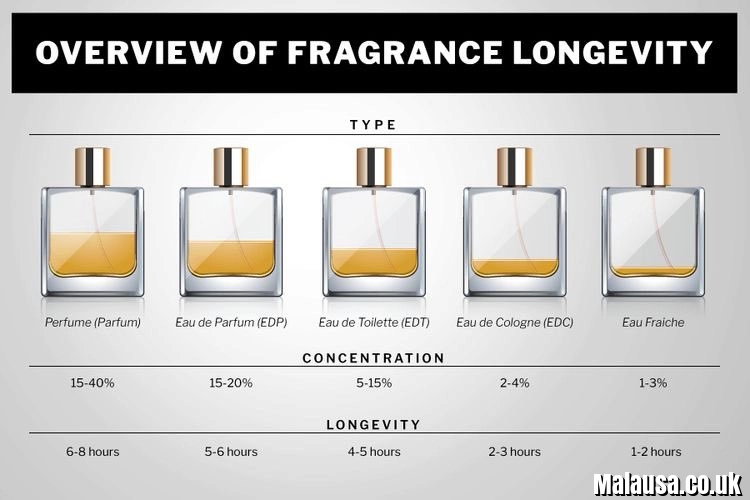
Perfumes are commonly classified into several concentration levels based on the percentage of aromatic oils.
| Type | Oil Concentration | Longevity | Intensity | Typical Use |
|---|---|---|---|---|
| Parfum (Extrait de Parfum) | 20–40% | 8–24+ hours | Very strong | Evening events, luxury wear |
| Eau de Parfum (EDP) | 15–20% | 4–8 hours | Strong | Everyday and office use |
| Eau de Toilette (EDT) | 5–15% | 3–6 hours | Medium | Casual daytime wear |
| Eau de Cologne (EDC) | 2–5% | 2–4 hours | Light | Fresh post-shower scent |
| Eau Fraîche / Body Mist | 1–3% | 1–2 hours | Very light | Quick refreshment |
Parfum (Extrait de Parfum)
This is the most concentrated and luxurious perfume type. It contains the highest amount of fragrance oils and typically lasts all day with minimal application.
Eau de Parfum (EDP)
EDP is the most popular perfume level in the US because it balances longevity, intensity, and affordability.
Eau de Toilette (EDT)
EDT offers a lighter scent, making it perfect for daily wear, work environments, or warm climates.
4. Benefits of Choosing the Right Perfume Level
Selecting the correct perfume concentration can greatly improve your fragrance experience.
Longer Lasting Scent
Higher concentrations like Parfum and EDP provide longer-lasting fragrance without frequent reapplication.
Occasion Flexibility
Different perfume levels suit different occasions:
-
Parfum – evening events
-
EDP – work or social settings
-
EDT – casual daytime activities
Climate Adaptation
Climate affects fragrance performance.
For example:
-
Hot US regions (Florida, Texas): lighter fragrances like EDT
-
Cold regions (New York, Midwest winters): stronger perfumes like EDP or Parfum
Cost Efficiency
Lower concentrations provide a more affordable way to enjoy designer fragrances without purchasing expensive parfum versions.
5. How to Apply Perfume Correctly
Proper application improves fragrance longevity and projection.
Step 1: Choose the Right Concentration
Select fragrance strength based on the occasion and environment.
Example:
-
Workday → EDT or light EDP
-
Evening event → Parfum
Step 2: Apply on Pulse Points
Perfume works best when applied to warm areas of the body, such as:
-
wrists
-
neck
-
inner elbows
-
behind ears
Body heat helps diffuse the scent throughout the day.
Step 3: Avoid Rubbing the Fragrance
Many people rub their wrists together after applying perfume. This actually breaks down fragrance molecules and weakens the scent.
Allow perfume to air dry naturally.
Step 4: Layer Fragrances
Using matching body lotions or shower gels can extend scent longevity.
6. Risks, Side Effects & Storage Tips
Although perfumes are generally safe, some precautions should be considered.
Possible Skin Irritation
High concentrations may cause:
-
redness
-
itching
-
allergic reactions
Always perform a patch test before applying a new fragrance.
Over-Application
Strong perfumes can overwhelm people nearby and may cause:
-
headaches
-
nausea
-
scent fatigue
Using 1–3 sprays is usually enough.
Perfume Expiration
Most fragrances last 3–5 years when stored properly.
Signs of expired perfume include:
-
sour smell
-
darker liquid color
-
reduced longevity
Proper Storage
To preserve fragrance quality:
-
avoid bathroom humidity
Conclusion
Understanding perfume concentration levels helps consumers choose the perfect fragrance for their lifestyle, climate, and personal preferences. From luxurious Parfum with long-lasting depth to light and refreshing Eau de Cologne, each concentration offers a unique scent experience.
In the United States, perfumes remain a major part of personal grooming and fashion culture. By selecting the right fragrance level, applying it correctly, and storing it properly, you can enjoy a long-lasting scent that enhances confidence and personal style.
Frequently Asked Questions (FAQs)
1. What perfume concentration lasts the longest?
Parfum (Extrait de Parfum) lasts the longest, typically 8–24 hours.
2. What is the best perfume type for daily use?
Eau de Parfum (EDP) is the most popular choice for everyday wear.
3. How many sprays of perfume should you use?
Usually 1–3 sprays on pulse points is enough.
4. Does perfume smell different on different people?
Yes. Skin chemistry, pH level, and body temperature affect how fragrances develop.
5. How long does perfume last in a bottle?
Most perfumes remain usable for 3–5 years if stored properly.
