
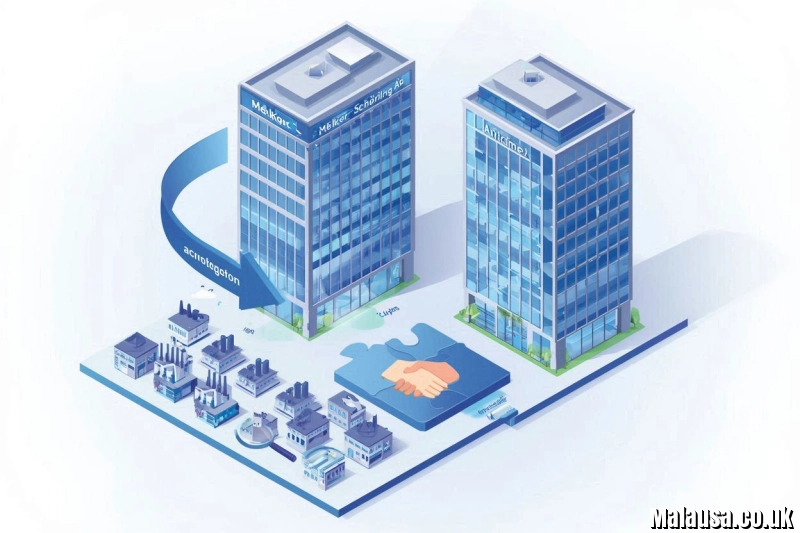
The Melker Schörling AB / Anticimex förvärvsstrategi stands out in 2026 as one of the most effective buy-and-build models in Europe’s service sector. What makes it so powerful isn’t just the number of acquisitions, but the discipline, long-term ownership, and technological edge behind every move. Backed by Melker Schörling AB (MSAB), Anticimex has transformed from a regional Nordic pest-control company into a global leader in preventive pest management and digital hygiene solutions.
This strategy blends acquisitions, innovation, and sustainability, creating a scalable system that continues to outperform competitors in a fragmented industry.
Table of Contents
ToggleBackground: The Two Key Players
Melker Schörling AB (MSAB)
MSAB is a family-owned investment company known for its active ownership model. Rather than passive investing, it takes board positions, influences strategy, and supports long-term expansion. Its philosophy revolves around building global leaders from strong local companies, a method previously proven in firms like Assa Abloy and Securitas.
Anticimex
Founded in 1934, Anticimex is now a global pest-control and hygiene services provider operating in 20+ countries with over 11,700 employees (2024). Its core strength lies in preventive pest control, especially through digital monitoring systems like Anticimex SMART, which reduce reliance on chemicals.
Ownership Evolution and Strategic Milestones
The transformation accelerated in 2012 when EQT acquired Anticimex, initiating a shift toward digitalization and global expansion. A critical turning point came in 2019, when MSAB joined as a long-term partner. By 2024, MSAB held 22.2% of capital and votes, making it the second-largest shareholder.
This ownership structure—featuring EQT, MSAB, and institutional investors like GIC and AMF—ensures patient capital and strategic stability, unlike traditional short-term private equity models.
Core Elements of the Acquisition Strategy
Buy-and-Build at Scale
Anticimex has completed 200+ acquisitions since 2012, targeting small and mid-sized local pest-control companies. This allows rapid entry into new markets while preserving local expertise and customer relationships.
Fast Integration Model
Newly acquired firms are integrated within months into Anticimex’s global platform, benefiting from centralized IT systems, procurement efficiencies, and branding, while still maintaining entrepreneurial flexibility at the local level.
Technology and Sustainability as Growth Drivers
A defining feature of the strategy is its investment in digital pest control technologies. The Anticimex SMART system uses IoT sensors and AI to detect pest activity in real time, enabling predictive and pesticide-free interventions.
This aligns with growing global demand for environmentally friendly solutions. By reducing chemical usage and food waste, Anticimex positions itself as a leader in ESG-driven services, which is increasingly important for investors and regulators alike.
Financial Performance and Market Impact
The results speak clearly. As of 2024, Anticimex reported:
- Revenue: 16,897 MSEK
- EBIT: 2,378 MSEK
- Growth since 2012: ~4× revenue, ~6× earnings
These numbers highlight the effectiveness of combining acquisitions with operational efficiency and innovation. The pest-control industry remains highly fragmented, making it ideal for continued consolidation.
Why the Strategy Works in 2026
Several factors explain the continued success of the Melker Schörling AB / Anticimex acquisition strategy:
- The industry’s fragmented structure creates endless acquisition opportunities
- The shift toward digital and preventive pest control favors technologically advanced players
- MSAB’s long-term ownership model allows sustained investment in R&D and expansion
- Strong board governance and industrial expertise ensure disciplined execution
Ultimately, this strategy is more than just growth through acquisitions—it’s a carefully orchestrated system combining capital, technology, and leadership. In 2026, it remains a benchmark for scalable, sustainable value creation, frequently cited as a model for modern industrial investment strategies.
