
Table of Contents
ToggleUnderstanding the Meaning of Germinatoire and Germination
The term germinatoire comes from the French language and refers to anything related to germination or the process of sprouting and seed development. In biological terms, it is closely connected to germination, which is the stage when a seed or spore begins to grow into a new organism. This process marks the transition from a dormant seed to an actively developing seedling. While the word “germinatoire” is not commonly used in everyday English, it is often found in scientific discussions about plant growth and early developmental stages.
Germination is one of the most important biological processes for plants because it is the starting point of the plant life cycle. Inside every seed lies a tiny embryo along with stored nutrients such as starches, proteins, and oils. When environmental conditions become favorable—usually involving the right amount of water, oxygen, and temperature—the seed begins to activate its internal metabolic systems. This leads to the growth of the root and shoot, eventually forming a seedling.
Seeds remain dormant until these favorable conditions occur. Dormancy is a natural survival mechanism that prevents seeds from germinating in environments where the young plant would not survive. For example, a seed might wait through winter or a dry season until conditions improve. Once the proper signals are present, the seed absorbs water, enzymes activate, and growth begins.
In modern biology, the germinative (germinatoire) stage is studied extensively because it plays a major role in agriculture, ecology, and plant science. Successful germination directly affects crop production, ecosystem restoration, and food security. In the United States, farmers and scientists carefully monitor germination rates to improve agricultural productivity. Even a small increase in germination success can significantly boost crop yields and reduce resource waste.
What Happens During Germination?
Germination is essentially the biological awakening of a seed. At first, a seed appears dry and inactive, but internally it contains a living embryo waiting for the right environmental signals. Once these signals appear, the seed begins absorbing water, activating metabolic processes that support growth.
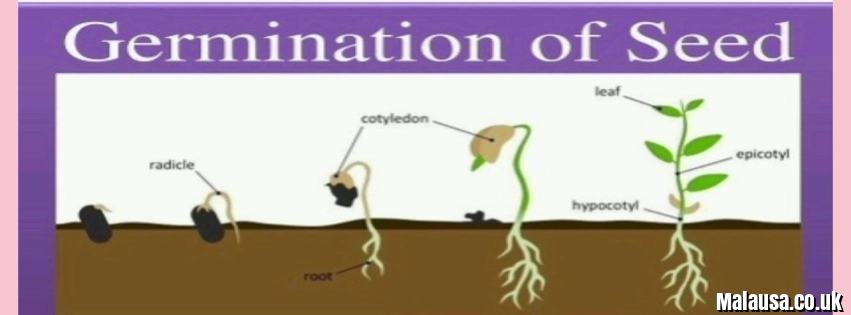
The first visible sign of germination is the emergence of the radicle, which becomes the plant’s root system. This root grows downward into the soil and begins absorbing water and minerals. Shortly afterward, the plumule, or shoot, grows upward toward light. This upward growth allows the young plant to eventually produce leaves and begin photosynthesis.
During the early stages, the seed relies entirely on stored food reserves inside its structure. These nutrients fuel cell division and growth until the plant develops leaves capable of photosynthesis. Once photosynthesis begins, the plant can produce its own energy and continue growing independently.
The process also involves several biochemical reactions. Enzymes break down stored nutrients such as starch into simple sugars, which the embryo uses for energy. Respiration increases significantly during germination, meaning the seed requires oxygen to support these metabolic activities.
In agriculture and gardening, understanding germination helps growers maximize plant survival rates. Farmers often test seed batches to determine their germination percentage, which indicates how many seeds will likely sprout under optimal conditions. High-quality seeds typically have germination rates above 85–90%, ensuring efficient crop production.
Stages of Seed Germination
Seed germination occurs through a series of well-defined stages. These stages may vary slightly between species, but the overall process remains similar across most plants.
1. Imbibition (Water Absorption)
The first stage of germination is imbibition, where the dry seed absorbs water from the surrounding soil. This causes the seed to swell and softens the protective seed coat. Water content in the seed can increase from around 10% to more than 50%, triggering the activation of enzymes that begin breaking down stored nutrients.
2. Activation of Metabolism
Once the seed is hydrated, its metabolic processes become active. Enzymes convert stored starch, proteins, and lipids into simple molecules such as glucose and amino acids. These molecules provide energy for the embryo’s growth. Respiration also increases during this stage, requiring sufficient oxygen in the soil.
3. Radicle Emergence
The radicle, or embryonic root, is the first structure to emerge from the seed. It breaks through the seed coat and begins growing downward due to positive geotropism, meaning it grows in the direction of gravity. The radicle anchors the plant in the soil and starts absorbing water and nutrients.
4. Plumule Growth
After the root establishes itself, the plumule begins to grow upward through the soil. This structure eventually develops into the plant’s stem and leaves. The upward growth occurs due to negative geotropism, meaning the shoot grows away from gravity and toward light.
5. Seedling Establishment
The final stage occurs when the plant develops true leaves and begins photosynthesis. At this point, the seedling becomes independent and no longer relies on the stored nutrients in the seed. The early seed leaves, known as cotyledons, may eventually wither as the plant grows.
Types of Germination
Plants display different types of germination depending on how the seed’s cotyledons behave during the process. The two primary types are epigeal and hypogeal germination, although some plants exhibit special forms like vivipary.
Epigeal Germination
In epigeal germination, the cotyledons are pushed above the soil surface. This happens because the hypocotyl (the stem section below the cotyledons) elongates and lifts them upward. Once above ground, the cotyledons often turn green and temporarily perform photosynthesis before eventually falling off.
Common plants that exhibit epigeal germination include:
-
Beans
-
Sunflowers
-
Castor plants
Hypogeal Germination
In hypogeal germination, the cotyledons remain below the soil surface while the shoot grows upward. In this case, the epicotyl (the stem above the cotyledons) elongates and pushes the true leaves above ground.
Plants that typically show hypogeal germination include:
-
Peas
-
Corn (maize)
-
Gram
This method protects the cotyledons underground, making them less vulnerable to environmental damage or grazing animals.
Viviparous Germination
A special type of germination called vivipary occurs when seeds begin sprouting while still attached to the parent plant. This phenomenon is common in mangrove trees, which grow in coastal environments. The seedling begins developing before falling into the water or soil, giving it a survival advantage in unstable habitats.
Requirements for Successful Germination
Seeds require several environmental factors to germinate successfully. If any of these conditions are missing, the seed may remain dormant or fail to sprout.
| Factor | Description | Typical Conditions |
|---|---|---|
| Water | Activates enzymes and softens the seed coat | Seeds absorb 2–3 times their weight in water |
| Temperature | Controls enzyme activity and growth speed | Warm crops: 20–30°C; Cool crops: 10–20°C |
| Oxygen | Required for cellular respiration | Well-aerated soil conditions |
| Light | Some seeds require light, others prefer darkness | Depends on species |
| Seed Viability | Seeds must be alive and undamaged | Proper storage improves viability |
Different plants have different optimal ranges. For example, tomatoes germinate best in warm temperatures, while lettuce prefers cooler conditions. If soil becomes waterlogged, oxygen levels drop and germination may fail.
Another key aspect is breaking seed dormancy. Some seeds have extremely tough coats that prevent water absorption. Techniques such as scarification (scratching the seed coat) or stratification (exposing seeds to cold temperatures) are often used to trigger germination.
Practical Applications of Germination in the United States
Understanding germination is extremely important in the United States agricultural and gardening industries. Every year, millions of acres of crops depend on reliable seed germination to produce food, animal feed, and raw materials. According to the USDA, the United States is one of the world’s largest agricultural producers, making seed quality and germination rates critical for economic success.
Home Gardening
Home gardeners often start seeds indoors before transferring seedlings to outdoor gardens. This method allows plants to develop strong roots before facing outdoor conditions. Common tips include:
-
Using sterile seed-starting soil to prevent fungal diseases
-
Soaking large seeds overnight to speed up germination
-
Maintaining consistent moisture and temperature
Many gardeners also grow edible sprouts, which are germinated seeds harvested early for nutrition. Sprouts such as alfalfa, broccoli, and mung beans are rich in vitamins, enzymes, and antioxidants.
Commercial Agriculture and Research
In large-scale farming, advanced technologies are used to maximize germination success. Controlled-environment germinators, automated irrigation systems, and seed treatments help ensure high viability rates. Farmers also conduct germination tests, such as the paper towel method, to determine how many seeds will sprout before planting them in fields.
Germination research also supports ecological restoration projects across the United States. Native plant seeds used for restoring prairies, forests, and wetlands often require specialized treatments such as cold moist stratification for 30–60 days. These techniques mimic natural seasonal cycles, ensuring successful plant establishment.
Conclusion
The concept of germinatoire, or the germinative process, represents the crucial moment when life begins for plants and many other organisms. Germination transforms a dormant seed into a growing seedling through a sequence of biological stages that involve water absorption, enzyme activation, root emergence, and shoot development. This process depends heavily on environmental factors such as temperature, moisture, oxygen, and seed viability.
Understanding germination is essential not only for botany and plant science but also for agriculture, food production, and ecosystem restoration. From backyard gardening to large-scale farming operations in the United States, successful germination determines the productivity and survival of plant species.
FAQs
1. What does germinatoire mean?
Germinatoire is a French term meaning related to germination or the sprouting process of seeds and spores.
2. How long does seed germination usually take?
Depending on the species, germination can take 2–3 days to several weeks.
3. What is the first stage of germination?
The first stage is imbibition, where the seed absorbs water and begins swelling.
4. Why do seeds remain dormant?
Dormancy protects seeds from germinating during unfavorable environmental conditions.
5. What are the two main types of germination?
The two primary types are epigeal germination (cotyledons above ground) and hypogeal germination (cotyledons remain underground).
